

Introduction
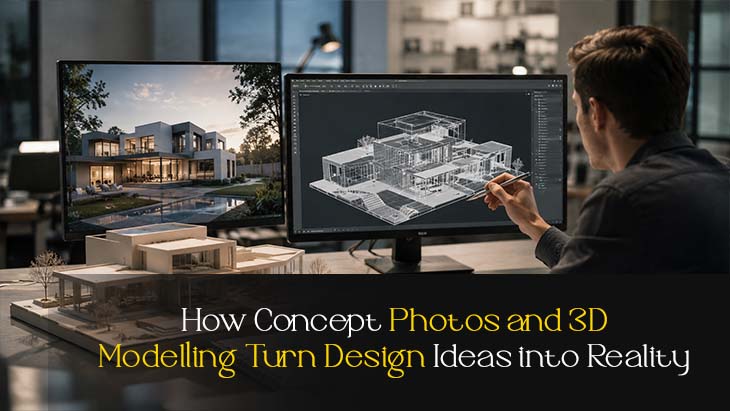
In today's fast-paced design industry, clients expect more than sketches and floor plans when planning a new office, commercial space, or interior project. They want to visualise the outcome before construction begins and gain confidence that their investment will deliver the desired results. This is where concept photos and 3D modelling have transformed the design process. By creating realistic visual representations of ideas, designers can bridge the gap between imagination and reality, helping clients make informed decisions throughout a project. As businesses increasingly seek innovative office space design solutions, concept photos and 3D modelling have become essential tools for delivering successful and efficient design outcomes.
Understanding Concept Photos and 3D Modelling
Concept photos and 3D modelling are advanced visualization techniques that allow designers to present ideas in a realistic and engaging manner. Concept photos provide visual inspiration by showcasing design themes, materials, layouts, and aesthetics, while 3D modelling creates a digital representation of a proposed space or structure. Together, these tools enable clients to see how a project will look before any physical work begins. Rather than relying solely on technical drawings, stakeholders can experience a detailed preview of the final design and better understand the vision behind the project.
Bringing Design Concepts to Life
One of the biggest challenges in any design project is translating ideas into something clients can easily understand. Traditional blueprints and sketches often require interpretation, making it difficult for non-design professionals to visualize the finished result. Concept photos and 3D models eliminate this challenge by presenting realistic visuals that clearly communicate the designer’s intentions. Clients can see the placement of furniture, lighting arrangements, color schemes, and overall spatial layouts, making the design process more transparent and collaborative.
Improving Client Communication
Effective communication is essential for successful project execution. Misunderstandings during the planning stage can lead to costly revisions and delays later in the project. Concept photos and 3D modelling create a common visual language between designers and clients, ensuring that everyone shares the same understanding of the project goals. Instead of relying on technical explanations, designers can use visual presentations to demonstrate ideas clearly. This approach improves feedback, reduces confusion, and speeds up decision-making.
Enhancing Decision-Making Confidence
Making design decisions can be challenging when clients are unable to fully visualise the outcome. Concept photos and 3D modelling help eliminate uncertainty by providing realistic previews of proposed spaces. Clients can compare multiple layouts, materials, furniture options, and finishes before making final selections. This level of clarity increases confidence in decision-making and helps ensure that the completed project aligns with expectations. Businesses investing in innovative office space design solutions particularly benefit from this approach because workplace design directly impacts productivity and employee satisfaction.
Reducing Costly Design Changes
Design modifications during construction are often expensive and time-consuming. Many changes occur because clients only realise they dislike certain aspects of a design after seeing them implemented. With concept photos and 3D modelling, potential issues can be identified and resolved before construction begins. Clients can request adjustments during the planning stage when changes are easier and less costly to implement. This proactive process helps reduce project risks, control budgets, and improve overall efficiency.
Creating Realistic Visual Experiences
Modern 3D modelling software can generate highly realistic visualisations that closely resemble the finished project. Advanced rendering techniques accurately simulate lighting conditions, textures, materials, and spatial dimensions. Clients can explore every aspect of a design in remarkable detail, gaining a realistic understanding of how the space will look and feel. These immersive visual experiences make it easier to evaluate design choices and identify opportunities for improvement before implementation.
Supporting Innovative Office Space Design Solutions
Workplace environments are evolving rapidly, and businesses require office spaces that support collaboration, flexibility, and employee well-being. Concept photos and 3D modelling play a crucial role in developing innovative office space design solutions by allowing organisations to visualise modern workplace concepts before construction. Companies can evaluate workstation layouts, meeting rooms, breakout areas, collaborative zones, and branding elements within a realistic digital environment. This helps ensure that office spaces align with organisational goals and workforce needs.
Streamlining Project Approvals
Project approvals often take longer when stakeholders struggle to understand design proposals. Detailed concept photos and 3D visualisations simplify the approval process by presenting ideas in an easy-to-understand format. Decision-makers can quickly evaluate designs, provide feedback, and approve concepts with greater confidence. Faster approvals reduce delays and keep projects moving forward efficiently, benefiting both designers and clients.
Enhancing Collaboration Among Project Teams
Design projects typically involve architects, interior designers, engineers, contractors, and business stakeholders. Concept photos and 3D models serve as valuable collaboration tools by providing a shared visual reference for all parties involved. Team members can review designs together, discuss modifications, and coordinate project requirements more effectively. This collaborative approach minimizes misunderstandings and ensures alignment throughout the design and construction process.
Improving Space Planning and Functionality
A visually appealing design must also be functional. Concept photos and 3D modelling help designers evaluate how people will interact with a space and identify opportunities to improve usability. In office environments, this includes assessing employee movement patterns, workspace configurations, meeting room accessibility, and collaborative areas. By analysing functionality before construction begins, businesses can create workspaces that maximise productivity and efficiency.
Supporting Sustainable Design Practices
Sustainability has become an important consideration in modern design. Concept photos and 3D modelling enable designers to evaluate environmentally responsible solutions before implementation. They can test natural lighting strategies, assess material selections, and optimise space utilisation to reduce environmental impact. These insights help businesses create sustainable workplaces while maintaining aesthetic appeal and operational effectiveness.
Leveraging Technology for Future-Ready Design
As technology continues to advance, concept photos and 3D modelling are becoming even more sophisticated. Integration with Virtual Reality (VR), Augmented Reality (AR), and Artificial Intelligence (AI) allows clients to experience designs in increasingly immersive ways. These innovations are reshaping how spaces are planned and developed, enabling businesses to create future-ready environments that adapt to changing needs and expectations.
The Future of Visualisation in Design
The future of design visualisation lies in creating more interactive and data-driven experiences. Emerging technologies will allow clients to explore spaces in real time, make instant modifications, and receive AI-generated recommendations based on their preferences. As these capabilities evolve, concept photos and 3D modelling will continue to play a central role in helping designers transform ideas into tangible realities. Businesses seeking innovative office space design solutions will increasingly rely on these technologies to create smarter, more efficient, and more engaging environments.
Conclusion
Concept photos and 3D modelling have revolutionised the way design ideas are communicated, evaluated, and implemented. By providing realistic visual representations of projects before construction begins, these tools help clients make informed decisions, reduce costly changes, and improve collaboration among stakeholders. From enhancing office layouts to supporting sustainable design practices, they play a critical role in delivering successful projects. As technology continues to advance, concept photos and 3D modelling will remain essential components of Innovative Office Space Design Solutions, helping businesses turn creative visions into reality with greater confidence and precision.
Frequently Asked Questions (FAQs)
How do concept photos help in the design process?
Concept photos provide visual inspiration and help clients understand design styles, layouts, colors, and materials before a project begins.
What is 3D modelling in interior and office design?
3D modelling is the process of creating realistic digital representations of spaces, allowing clients to visualize designs before construction.
Why are 3D renderings important for clients?
They help clients understand the final design, compare options, and make confident decisions before investing in construction.
Can 3D modelling reduce project costs?
Yes, it helps identify design issues early, reducing the need for expensive changes during the construction phase.
How do concept photos and 3D modelling support innovative office space design solutions?
They allow businesses to visualise workplace layouts, collaboration zones, branding elements, and functionality before implementation, leading to more effective office design decisions.

Leave a reply