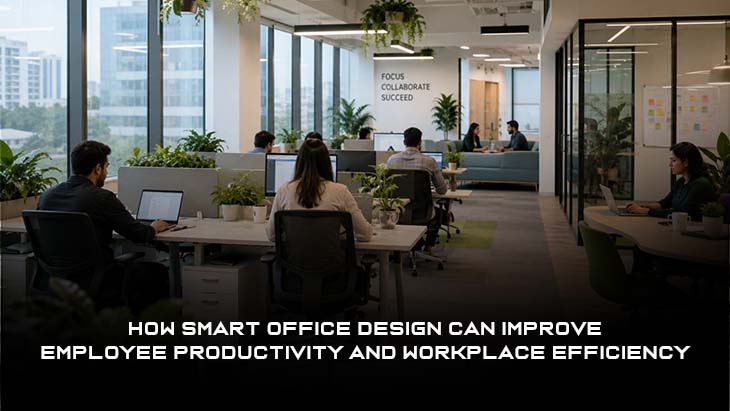


In today’s competitive business environment, the workplace plays an important role in how employees perform, collaborate, and communicate. A well-planned office is no longer simply a place where employees sit and complete their daily tasks. Businesses are increasingly adopting smart office design to create comfortable, flexible, technology-enabled, and productive work environments. By combining thoughtful layouts, modern technology, ergonomic furniture, effective lighting, and collaborative spaces, companies can create workplaces that support both employee productivity and workplace efficiency.
What Is Smart Office Design?
Smart office design refers to the use of modern workplace planning, technology, and intelligent space management to create an environment that supports business operations and employee needs. It can include automated lighting, smart temperature controls, collaborative workspaces, ergonomic furniture, efficient meeting areas, and technology-enabled communication systems. The objective is to create an office that is functional, comfortable, adaptable, and aligned with the way employees actually work.
A successful smart workplace design focuses on more than appearance. It considers employee behaviour, workflow, communication, technology requirements, and the overall working experience. When these elements are properly integrated, the office can become an environment that encourages concentration, creativity, collaboration, and better performance.
How Office Design Influences Employee Productivity
The physical workplace can have a significant influence on how employees feel and perform throughout the day. An uncomfortable chair, poor lighting, excessive noise, limited workspace, or an unsuitable office layout can create unnecessary distractions and reduce concentration. On the other hand, a thoughtfully designed environment can make every day work more comfortable and convenient.
Office design for productivity focuses on creating spaces that support different types of tasks. Employees may require quiet areas for focused work, collaborative spaces for brainstorming, private rooms for discussions, and comfortable areas for informal communication. Providing suitable spaces for these activities allows employees to choose environments that match their immediate work requirements.
The Role of Ergonomics in a Smart Workplace
Ergonomics is an important part of modern office planning because employees spend a significant amount of time working at their desks. Ergonomic chairs, adjustable desks, appropriate monitor positioning, and properly designed workstations can help create a more comfortable working environment. When employees are physically comfortable, they can focus more effectively on their responsibilities instead of being distracted by an unsuitable workstation.
A smart office design can combine ergonomic principles with flexible furniture and adaptable workstations. This allows employees to adjust their workspace according to their individual requirements while supporting a healthier and more comfortable working experience.
Using Technology to Improve Workplace Efficiency
Technology is one of the major components of a smart workplace. Modern offices can use technology to simplify routine activities, improve communication, manage meeting spaces, and make better use of available resources. Smart lighting systems, automated climate controls, room-booking systems, digital collaboration tools, and connected workplace devices can reduce unnecessary manual processes.
These technologies can contribute to workplace efficiency by helping employees spend less time dealing with operational inconveniences. For example, an automated meeting-room booking system can make it easier to find available spaces, while smart lighting can adjust according to occupancy and environmental conditions. When technology works seamlessly in the background, employees can dedicate more attention to important business activities.
Creating Spaces That Encourage Collaboration
Collaboration is essential for many modern businesses, particularly for teams working on creative projects, problem-solving, and strategic initiatives. Traditional office layouts may not always provide enough opportunities for effective communication. A modern smart office can incorporate dedicated collaboration areas where employees can comfortably exchange ideas and work together.
Open collaborative spaces, informal meeting areas, and technology-enabled conference rooms can make communication more convenient. At the same time, smart office design should maintain a balance between collaborative and private spaces because employees also need quiet environments for tasks that require deep concentration.
Importance of Natural Light and Indoor Environment
The quality of the indoor environment can also influence employee experience and productivity. Natural light can make an office feel more welcoming and comfortable, while appropriate artificial lighting can support visibility and reduce unnecessary visual strain. Office layouts that maximise access to windows and daylight can contribute to a more pleasant workplace atmosphere.
Temperature, ventilation, air quality, and noise levels are equally important. A well-designed workplace considers these factors to create an environment where employees can remain comfortable throughout the working day. Smart building technologies can further support this by monitoring and adjusting environmental conditions based on occupancy and workplace requirements.
Flexible Workspaces for Modern Businesses
The way people work has changed significantly, and many organisations now require workplaces that can adapt to different working styles. Employees may work individually one day, collaborate with a team the next, and attend virtual meetings at another time. A fixed office layout may not effectively support all these activities.
Flexible smart workplace design can provide adaptable furniture, movable partitions, multipurpose rooms, and shared workspaces. Such flexibility allows businesses to make better use of available office space while giving employees greater freedom to work according to their tasks. It can also help organisations adapt their office environment as teams and business requirements change.
How Smart Design Can Improve Employee Experience
Employee experience extends beyond salary, benefits, and company culture. The physical environment in which people work can also influence their perception of the organisation. A comfortable, modern, and well-organised office can demonstrate that a company values its employees and their working experience.
When employees have access to suitable technology, comfortable workstations, collaborative areas, and quiet spaces, everyday workplace challenges can be reduced. This can contribute to greater satisfaction and engagement, which may ultimately support stronger employee productivity and organisational performance.
Smart Office Design and Business Cost Management
Although implementing smart workplace solutions requires an initial investment, thoughtful design can contribute to long-term cost efficiency. Smart lighting and climate-control systems can help businesses manage energy consumption, while efficient space planning can reduce the need for unnecessary office expansion.
Technology-enabled workplace management can also provide valuable information about how different areas of an office are being used. Businesses can use these insights to make informed decisions about space allocation, facilities, and future workplace planning. This combination of better resource utilisation and improved employee experience makes smart office design valuable from both operational and strategic perspectives.
The Future of Smart Office Design
The future of workplace design is likely to become increasingly focused on flexibility, technology, employee wellbeing, and data-driven decision-making. Businesses are moving toward environments that can adapt to changing work patterns instead of relying on traditional fixed layouts.
Artificial intelligence, connected workplace systems, occupancy sensors, automated facilities, and advanced collaboration technologies can further transform how offices operate. However, technology should support employees rather than make the workplace unnecessarily complicated. The most effective smart office design will combine technology with human-centred planning to create spaces that are efficient, comfortable, and practical.
Conclusion
Smart office design can play an important role in creating productive and efficient workplaces. By combining ergonomic workstations, flexible layouts, modern technology, collaborative areas, natural lighting, and intelligent workplace management, businesses can create environments that support both employees and organisational goals. A thoughtfully planned office can reduce distractions, improve collaboration, optimise resources, and contribute to better employee productivity and workplace efficiency. As working styles continue to evolve, investing in a flexible and people-focused smart workplace can help businesses build an environment that is prepared for the future.

Leave a reply