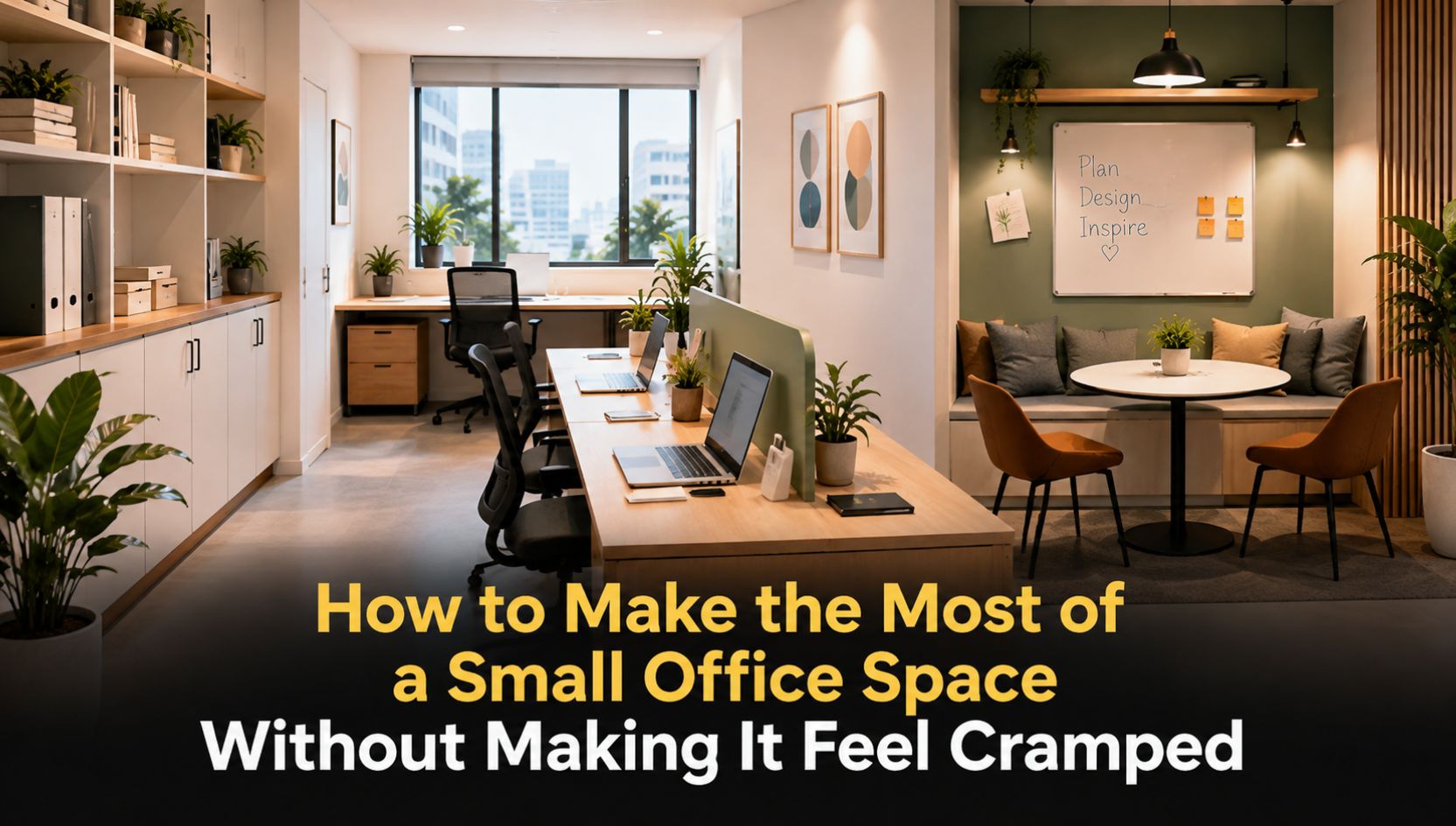


A small office does not have to feel small. Many startups, growing teams, and established businesses work in compact spaces, and the real challenge is rarely the square footage itself. It is how that space is planned, furnished, and used every day. A cramped office can leave employees feeling stressed, distracted, and less motivated, while a well-designed small office can feel open, calm, and surprisingly productive. The good news is that you do not need a bigger floor plan to get better results. With thoughtful small office design, smart space planning, and a few practical choices, you can make every inch work harder for your business. This guide explains how to make the most of a small office space without making it feel cramped, so your team can enjoy a workspace that looks good and works well.
Start With Smart Space Planning
Every successful small office begins with a clear plan. Before buying a single desk or moving a single chair, take time to observe how your team actually works. Notice which areas are used every day, which corners sit empty, and where people tend to crowd together or get in each other's way. A good office layout follows the natural flow of work rather than fighting against it. When walkways are clear and desks are placed with purpose, even a compact room feels organized instead of overloaded. It also helps to divide the space into simple zones for focused work, meetings, and short breaks. These zones do not need walls or heavy construction. A change in flooring, a different lighting style, or a low bookshelf can quietly signal where one activity ends and another begins. Leaving enough room for people to move comfortably, ideally with clear paths between workstations, is one of the simplest ways to prevent the crowded feeling that small offices are known for. Good planning at this early stage also saves time and money later, because you avoid buying pieces that do not fit the way your team works.
Choose Furniture That Works Harder
In a small office, every piece of furniture should earn its place. Oversized desks and bulky cabinets are the fastest way to make a room feel tight, so it is worth choosing pieces that are proportionate to the space. Look for slim desks with built-in storage, folding tables that can be tucked away when not in use, and lightweight chairs that can be moved or stacked when a meeting area is needed. Furniture with open legs allows the eye to see more of the floor, which makes the entire room feel larger than it really is. Modular pieces are especially useful because they can be rearranged as your team grows or your needs change. Sit-stand desks, for example, allow employees to work in different positions without needing extra furniture. Keeping the total number of pieces lower and choosing quality over quantity also gives your team more room to breathe, and it gives the office a cleaner, more professional appearance that visitors notice right away.
Use Vertical Space and Smart Storage
When floor space is limited, the smartest move is to look up. Wall-mounted shelves, tall bookcases, and overhead cabinets keep documents, supplies, and equipment off desks and away from walkways. Clutter is one of the biggest reasons an office feels cramped, and giving every item a designated home makes an immediate difference. Built-in storage under desks, inside benches, or along the walls can hide items that would otherwise sit out in the open. Digital filing is another powerful solution, since moving documents to the cloud reduces the need for large filing cabinets and paper storage. It is also worth reviewing what you actually keep in the office. Old files, unused equipment, and duplicate supplies quietly take up valuable space, and clearing them out can free up more room than any new piece of furniture. A tidy workspace feels calmer and more spacious, and it helps employees stay focused on their tasks instead of being distracted by the mess around them.
Let Light and Color Open the Room
Lighting and color have a powerful effect on how large a space feels, and both are affordable ways to improve a small office. Natural light is the best tool you have, so keep windows unblocked and place workstations where daylight can reach them. Avoid heavy curtains or tall furniture in front of windows, and consider light, sheer blinds that soften glare without darkening the room. Where natural light is limited, layered lighting works best. Combine bright overhead fixtures with desk lamps and softer accent lights to remove dark corners and reduce eye strain. Light, neutral wall colors such as white, soft gray, or pale beige reflect light and make walls appear farther apart. You can still add personality through a few accent colors, plants, or artwork, as long as the overall palette stays simple and consistent. Mirrors and glass partitions are also useful, since they stretch the space visually and allow light to travel further while still giving people some separation.
Balance Privacy and Collaboration
One of the biggest concerns in a compact workplace is noise and lack of privacy. When people sit close together, phone calls, conversations, and video meetings can easily spill over into other people's focus time. Since you cannot always build separate rooms, flexible solutions are the answer. Movable screens, acoustic panels, and soft furnishings such as rugs and fabric-covered chairs absorb sound and reduce echo. A small phone booth or a quiet corner gives employees a place to take a call or concentrate on detailed work without disturbing anyone. At the same time, teamwork still matters, so include a small shared table or a compact collaboration nook where people can meet quickly. This space can double as a lunch spot or an informal meeting area, which means it earns its footprint throughout the day. Designing for both privacy and collaboration helps a small team stay productive, comfortable, and connected, even when the office is compact.
Keep Technology and Cables Under Control
Modern offices rely on technology, but wires, chargers, and equipment can quickly make a small space look messy. Planning your technology carefully helps keep the room clean and open. Position desks near power sources, use cable trays or channels under desks, and choose wireless devices wherever possible. Wall-mounted screens save desk space and work well for presentations, while shared printers and equipment stations reduce duplication. If your team works in a hybrid model, consider whether every person needs a permanent desk. Shared desks with simple booking systems can free up a surprising amount of floor space and make the office feel far less crowded. Good technology planning also supports smooth video calls, reliable connectivity, and a professional environment, all of which matter more than ever in a workplace where teams collaborate both in person and online.
Visualize Your Layout Before You Commit
Rearranging furniture and redesigning a small office can be expensive if the final result does not work as expected. That is why many businesses now preview their space before making any changes. Seeing your layout in 3D allows you to test different arrangements, spot problems early, and make confident decisions about furniture, storage, and traffic flow. A visual walkthrough can reveal whether a desk blocks a doorway, whether a meeting corner feels too tight, or whether a storage wall makes the room feel heavy. Working with an experienced office design partner such as Pluto Planet can help you turn a tight floor plan into a well-organized, tech-enabled workspace that suits your team and your budget. With professional space planning and clear visuals, you avoid costly mistakes and get a design that fits your business from day one.
Conclusion
A small office is not a limitation. It is an opportunity to be intentional about every design choice. By planning the layout carefully, choosing versatile furniture, using vertical storage, making the most of light and color, balancing privacy with collaboration, and keeping technology organized, you can create a workspace that feels open, inviting, and efficient. Small changes often bring the biggest improvements, and even simple steps such as clearing clutter or lightening the color palette can transform how a room feels. If you are ready to turn a compact office into a space your team will love, Pluto Planet can guide you from the first layout idea to the finished design, so your small space works as hard as your business does.

Leave a reply